

- 01 Why cold weather trips the air compressor circuit breaker
- 02 What is startup surge, and how is it different from an overload?
- 03 Why does low voltage trip the air compressor circuit breaker?
- 04 How do pressure and load cause a compressor motor overload?
- 05 What should you check, and what should you leave to a pro?
- 06 Frequently Asked Questions
- 07 Get Your Compressor Through Winter
An air compressor circuit breaker trips when the motor draws more current than the circuit allows. In winter, the usual causes are a hard cold start, a low or unbalanced supply voltage, worn motor or start components, or a compressor working against excessive pressure.
Why cold weather trips the air compressor circuit breaker
Cold weather adds load to the motor before the compressor makes a single pound of air.
As oil thickens as temperatures drop, the pump has to push through a heavier fluid. The motor works harder to turn it over, and a hard start pulls more current. A circuit that held fine in July can sit right at its limit in January, so your air compressor circuit breaker trips on the first cold start of the day.
A basic cold weather air compressor maintenance routine keeps oil and drains from adding to the load. If your shop in OKC sees a hard freeze, expect the first start to be the hardest one.
What is startup surge, and how is it different from an overload?
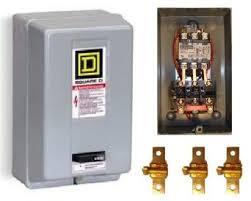 Startup surge is the brief spike of current a motor draws the instant it’s energized.
Motor inrush current can reach about 20 times normal running current in the first half-cycle, then settle to about 4 to 8 times running current as the motor spins up. The U.S. Department of Energy’s sourcebook adds that starting current exceeds 6 times running current, and that reduced voltage starters can bring it down.
A brief startup surge is normal. An air compressor tripping the breaker on nearly every start is not. It means something in the system is wrong, and the breaker is doing its job.
That’s where hardware matters. Properly selected motor starters for air compressors protect the motor, and reduced-voltage starting methods can bring that surge down.
Why does low voltage trip the air compressor circuit breaker?
Low or unbalanced supply voltage makes a motor draw more current to do the same work. That extra current is what your air compressor circuit breaker sees.
Voltage unbalance is the quiet one. On three-phase motors, even a small difference between phases can do real damage. The U.S. Department of Energy’s voltage unbalance tip sheet from DOE recommends that voltage unbalance at the motor terminals not exceed 1 percent. It also notes that current unbalance can be 6 to 10 times as large as the voltage unbalance. A small imbalance on the supply becomes a big one in the windings.
Unbalanced currents heat the motor and wear it out early, and a failing motor will keep tripping the air compressor circuit breaker until it’s fixed. Have a licensed electrician measure voltage at the motor terminals.
How do pressure and load cause a compressor motor overload?
A compressor fighting too much discharge pressure asks more of its motor, and a motor asked for too much will eventually trip the air compressor circuit breaker.
A faulty unloader valve or check valve can also leave pressure trapped in the system after shutdown, forcing the motor to work harder on its next start. This mainly affects reciprocating compressors.
The DOE compressed air system sourcebook explains the pressure math. If discharge pressure rises an extra 10 psi without capacity being reduced by inlet valve modulation, brake horsepower rises 5 percent, and the motor could be overloaded. On a circuit that’s already marginal in cold weather, that can be the difference between running all shift and tripping at 7 a.m.
A motor that runs hot is often an overloaded one, which is the same problem behind air compressor overheating in any season. If your gauge climbs past where it normally cuts out, shut the unit down and call for service.
What should you check, and what should you leave to a pro?
Keep your checks simple and outside the electrical panel. If the breaker trips repeatedly, stop using the compressor and have it inspected before restarting.
- Note when the trip happens: on start, after running a while, or only on cold mornings
- Check that drains aren’t frozen or clogged
- Write down how often it trips so your technician has a pattern
Leave the rest to the pros. Have a licensed electrician check supply voltage and wiring. Call APEC service for compressor diagnosis and repair.
One rule isn’t negotiable: don’t install a bigger breaker to stop repeated trips. Breaker sizing depends on the motor and electrical circuit, so have a licensed electrician identify the problem and determine the appropriate protection.
Frequently Asked Questions
Most often, the motor is drawing more current than the air compressor circuit breaker allows. Common causes are a hard cold start, low or unbalanced voltage, a worn motor or starter, or too much discharge pressure. A repeat trip means something needs diagnosis, so call APEC service.
Every motor surges at startup, and cold oil makes the start harder. If the air compressor circuit breaker trips on nearly every start, the surge may be too big for the circuit, or the motor or starter may be worn. A technician should confirm the cause.
No. Breaker sizing depends on the motor and the circuit, and a larger breaker can hide the real problem. Find out why the air compressor circuit breaker is tripping instead, and have a licensed electrician check it.
Cold oil is thicker, so the motor works harder on startup. A circuit that was marginal in summer can cross the line in winter. If your air compressor circuit breaker only trips on cold mornings, a voltage check and a cold weather routine are good first steps.
Get Your Compressor Through Winter
Ready to stop the tripping? APEC supplies motors, motor starters, pressure switches, and safety valves to customers nationwide, with air compressor service available throughout Oklahoma. Visit aircompressorcfm.com or call 405-445-1216 to get your compressor running right.