
Oklahoma summers push industrial equipment hard. Ambient temperatures exceeding 100°F, high dust loads from dry winds, and wide humidity swings all compound stress on compressed air systems. A disciplined air compressor maintenance program is what separates continuous production from an emergency shutdown on the hottest day of the year.
This air compressor maintenance checklist covers essential tasks for facility managers running rotary screw compressors, reciprocating units or multi-stage systems across Oklahoma.
Why Summer Demands More from Your Compressor
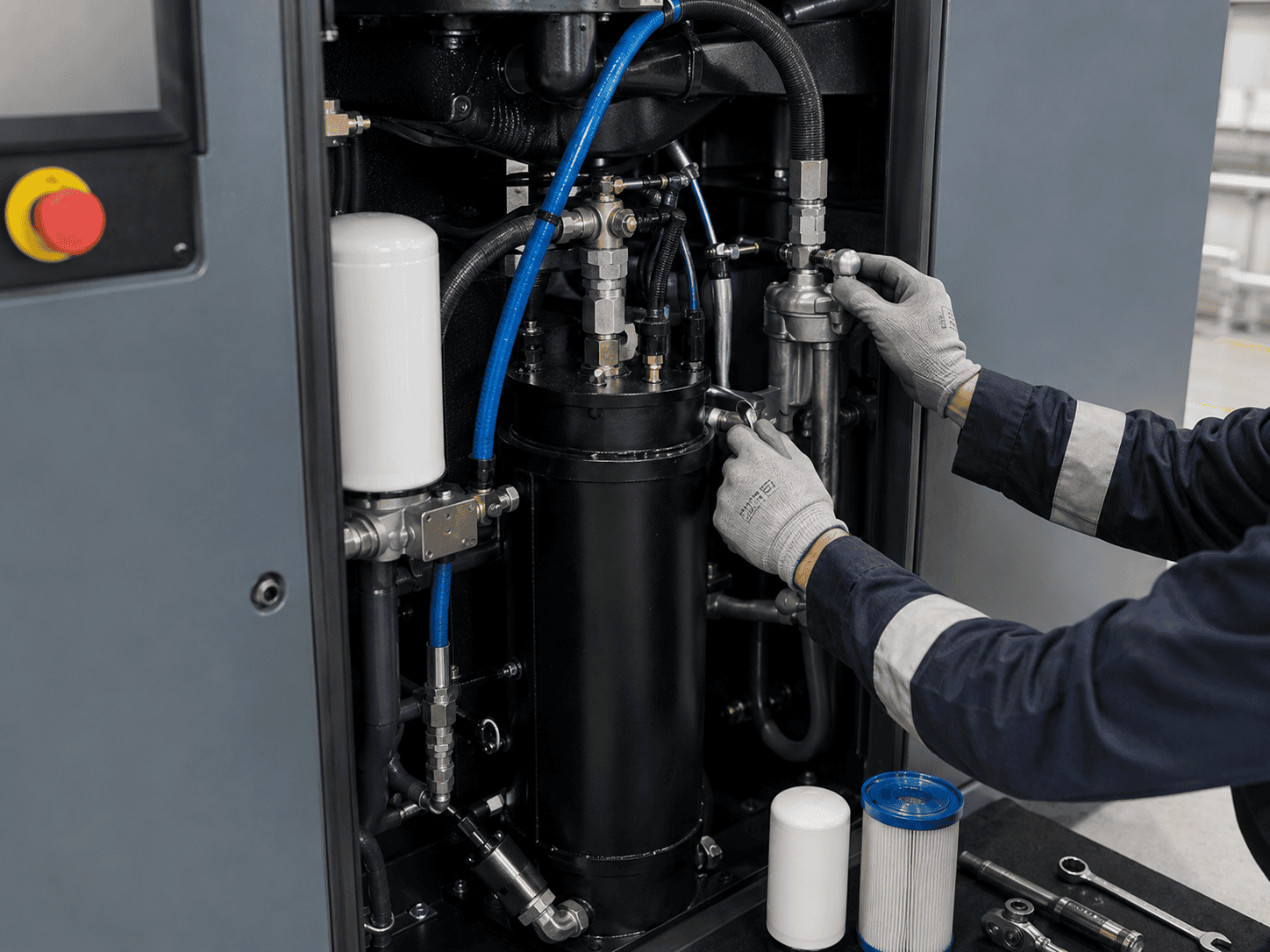
Heat is one of the biggest challenges for an air compressor. As temperatures climb, the compressor has to work harder to produce the same amount of air. A system that keeps up just fine in the spring may start falling behind during the hottest days of July, especially if it is already operating near its rated CFM.
Oklahoma’s summer also brings a heavy particulate load. Dust and airborne debris get pulled through intake filters at higher rates during dry stretches. A filter clean in March can choke by June. OSHA’s compressed air safety standards set the legal baseline for equipment maintenance, but consistent compressor service means exceeding that floor.
What Does Air Compressor Maintenance Actually Cover?
Routine compressor maintenance involves regularly inspecting, cleaning, testing, and replacing the parts that wear down over time, such as filters, belts, oil, separators, valves, and cooling components. A strong maintenance plan should cover more than the compressor itself. It should also include the rest of the air system, including dryers, drains, distribution lines, and point-of-use filters.
For rotary screw compressors, service intervals follow hour-meter readings. For reciprocating units, calendar-based schedules work better because duty cycles vary.
Monthly Maintenance Tasks
Run these air compressor maintenance tasks every 30 days during summer operation. Facilities with high duty cycles or dusty environments should shorten these intervals.
Air Intake Filter: Inspect and clean or replace. A clogged filter raises differential pressure, reduces CFM output, and forces the motor to draw excess current. During dry Oklahoma summers, filters can foul within three weeks.
Oil Level and Condition: Check oil level at the sight glass. Oil that turns dark, milky, or foamy signals contamination. Heat accelerates oil oxidation in units running at or near rated ambient temperature.
Separator Element: When the separator becomes saturated, oil can make its way into the air lines and the tools connected to the system. Check the differential pressure during every service visit to catch problems early.
Drain Valves: Automatic drains should release built-up moisture during every cycle, while manual drains should be checked at least once a month. When a drain valve stops working, water can collect inside the receiver tank. Over time, that moisture can cause corrosion and reduce the quality of the compressed air.
Belt Tension and Wear: On reciprocating units, check V-belt tension and inspect for cracking or glazing. Belts stretch in heat and a slipping belt cuts effective HP delivery.
Cooling System: Clean aftercooler and oil cooler fins with compressed air or low-pressure water. Dust-packed fins are the leading cause of high-temperature shutdowns during Oklahoma summers.
Heat-Specific Checks for Oklahoma Summers
Run these checks whenever ambient temperature exceeds 95°F.
Compressor Room Temperature: Verify the mechanical room stays within the manufacturer’s rated ambient range. Most industrial rotary screw units are rated to 100°F to 115°F. A hotter room will cause the unit to fault on high temperature before completing each cycle.
Ventilation and Airflow: Make sure intake louvers, exhaust vents, and room fans are clear and working properly. Without enough airflow, a closed compressor room can quickly become 15°F to 20°F hotter than the temperature outside.
Refrigerated Dryer Performance: Hot, humid Oklahoma air carries heavy moisture load. Your refrigerated dryer should achieve a pressure dew point at or below 35°F to 50°F at outlet. The Department of Energy recommends sizing dryers on peak summer inlet conditions, not annual averages. Moisture downstream is a sign that compressor service is overdue.
Thermal Shutdown Testing: Test high-temperature shutdown functions at least annually. If your unit hasn’t been tested in 12 months, a preventive maintenance visit before peak heat is worth scheduling.
How Often Should You Schedule Professional Service?
Most industrial facilities need professional compressor service every 1,000 to 2,000 operating hours, or at minimum twice per year. The Compressed Air and Gas Institute recommends that compressor service be performed by qualified technicians using manufacturer-specified parts. Off-spec filters or wrong oil viscosity can void warranties and shorten component life.
APEC’s services team covers preventive maintenance contracts, emergency repair, and system audits across Oklahoma. When equipment fails mid-summer, fast air compressor repair keeps a breakdown from halting production. APEC provides 24/7 support because failures don’t keep business hours.
FAQ
A typical checklist covers the basics, including checking the oil level and condition, inspecting the air intake filter, monitoring separator differential pressure, testing drain valves, checking belt tension, cleaning cooler fins, and confirming that safety shutdowns work properly. During Oklahoma summers, it is also smart to monitor the room temperature and make sure the air dryer is keeping up with the added heat and humidity.
Most industrial compressors require service every 1,000 to 2,000 operating hours. Oklahoma facilities should schedule routine service at minimum twice per year, with added inspections during peak summer heat.
Putting off routine service can lead to clogged filters, contaminated oil, separator problems, and overheating that causes the system to shut down. Moisture can also build up in the receiver tank, leading to corrosion and potential safety concerns. Regular preventive maintenance helps the equipment last longer and keeps the system operating safely.
Higher ambient temperatures increase the work required to compress a given volume of air, accelerate oil degradation, and raise the risk of thermal shutdown. Plan for reduced performance margins from June through August.
Routine tasks including oil checks, drain valve testing, and filter inspection can be managed by trained staff. Separator replacement, refrigerant system service and thermal shutdown testing are best left to a qualified technician with manufacturer-spec parts.
Warning signs include unexpected high-temperature shutdowns, audible belt slippage, oil mist downstream, and moisture at point-of-use tools. These signal that professional repair should be scheduled without delay.
Get Professional Support from APEC
APEC (Air Power Equipment Company) provides industrial-grade compressor service, repair, and system support to facilities across Oklahoma. From preventive maintenance contracts to 24/7 emergency service, APEC keeps your compressed air system running when production depends on it. Visit aircompressorcfm.com or contact APEC to schedule service.