

- 01 Why Oklahoma’s Climate Demands More from Your Compressor
- 02 Rotary Screw vs. Reciprocating: What Maintenance Each Requires
- 03 The Core Service Intervals You Need to Follow
- 04 Signs Your Compressor Is Telling You Something’s Wrong
- 05 What Neglect Actually Costs
- 06 Get Industrial Air Compressor Service on a Service Schedule
Need Industrial Air Compressor Service? Your compressor doesn’t announce when it’s about to fail. It just stops, usually in the middle of a shift, on the hottest day in August, when you can least afford the downtime.
That’s the reality of running compressed air equipment in Oklahoma. You need more industrial air compressor service than you would assume. The climate here isn’t gentle on industrial machinery. Summer temperatures push well past 100°F, humidity spikes and job sites generate the kind of fine particulate dust that finds its way into every seal, filter and intake. Without a consistent industrial air compressor service schedule, you’re not running preventive maintenance; you’re running a clock.
Why Oklahoma’s Climate Demands More from Your Compressor
Most compressor manufacturers publish service intervals based on standard operating conditions: moderate ambient temperatures, clean air, consistent load cycles. Oklahoma doesn’t give you any of that.
Summer heat accelerates oil degradation in rotary screw compressors. When ambient temps climb above 90°F, the oil’s viscosity changes faster, thermal protection trips more frequently and the separator element works harder to keep oil carryover in check. Dust from construction sites and oil/gas operations loads intake filters fast. And Oklahoma’s humidity swings mean moisture builds up in the system, particularly in reciprocating compressors that run intermittently.
That’s not a reason to panic. It’s a reason to schedule more aggressively than the manual says.
Rotary Screw vs. Reciprocating: What Maintenance Each Requires
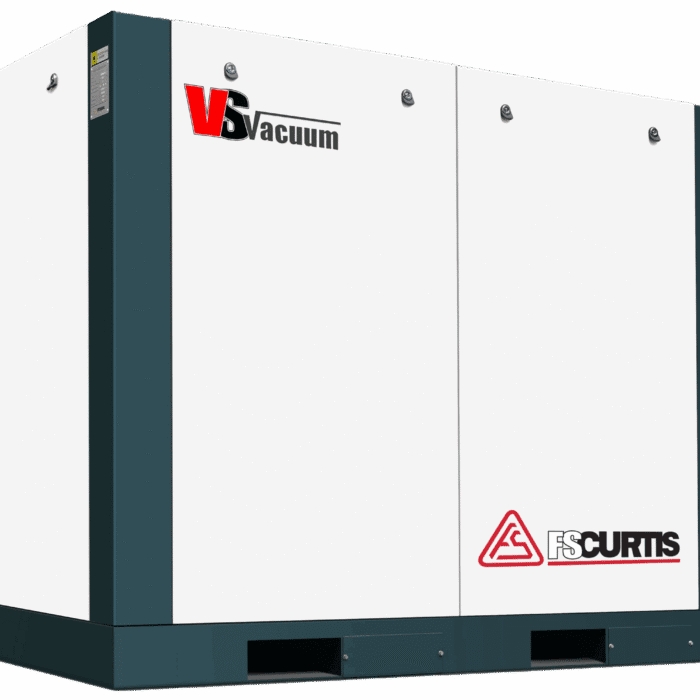 The two most common compressor types in industrial settings are rotary screw compressors and reciprocating (piston) compressors. They share the same job but wear differently.
Rotary screw compressors run continuously. The maintenance priority is fluid quality and separation. Key service points:
- Compressor oil and oil filter: every 2,000 hours under normal conditions, closer to 1,000 hours in dusty or high-heat environments
- Air/oil separator element: every 4,000 to 6,000 hours or when differential pressure climbs past the threshold
- Intake air filter: monthly inspections in clean environments, weekly in dusty field conditions
- Cooler fins: inspect and blow down quarterly; clogged coolers are a leading cause of high-temperature shutdowns in Oklahoma summers
Reciprocating compressors run on cycles. They take more mechanical abuse per cycle because of the piston action, and they generate more moisture in the tank and discharge lines. Key service points:
- Cylinder oil and valves: valve condition is the biggest variable; worn valves cut capacity and efficiency before any other symptom appears
- Belt tension and condition: belts stretch and crack in heat; a loose belt loses drive efficiency and puts uneven load on the motor bearings
- Moisture drain / automatic drain valve: verify it’s cycling correctly every service visit; failed drains fill tanks with water fast during humid months
- Head gaskets and rings: inspect annually on high-cycle units
For parts specific to your unit, see APEC’s service kits and repair parts inventory.
The Core Industrial Air Compressor Service Intervals You Need to Follow
The U.S. Department of Energy’s Compressed Air Challenge resources note that industrial compressed air systems often run at 10 to 30% lower efficiency than their design spec, largely because of deferred maintenance. That’s not a design failure; it’s a service failure.
A practical Oklahoma service schedule for a medium-duty industrial compressor:
- Monthly: inspect or replace the air filter; drain manual condensate traps; check fluid level
- Quarterly: inspect belts and hoses; clean cooler fins; test safety valves; confirm the auto-drain is working
- Semi-annually: change compressor oil and oil filter; inspect discharge valves on reciprocating units; test pressure and flow
- Annually: complete full service, including the separator element, gaskets, motor lubrication and a full system leak audit
If your unit runs more than one shift a day or operates in a dusty environment, compress these intervals. A compressor running 16+ hours a day hits 2,000 hours in roughly four months, not a year.
Signs Your Compressor Is Telling You Something’s Wrong
Even between service visits, your equipment gives you signals. Don’t ignore them.
- Higher-than-normal discharge temperature on a rotary screw usually means a clogged cooler, degraded oil, or a failing thermal valve
- Increased cycle frequency on a reciprocating compressor often points to a leaking check valve or discharge valve
- Oil in the discharge air signals a worn separator element or piston rings depending on the compressor type
- Excessive moisture in the system downstream points to a failed drain, an undersized dryer, or a dryer that hasn’t been serviced
- Unusual noise or vibration on any compressor type is a mechanical warning. Bearings, loose mounts and worn couplings all announce themselves before they fail completely
Any of these warrant a service call before the next scheduled interval. Contact APEC for on-site diagnostic service in the Oklahoma City area.
If you’re running diesel-powered portable units on remote job sites, those have their own service requirements. See our diesel air compressor resource for what’s different.
What Neglect Actually Costs
A standard industrial air compressor service visit runs far less than an emergency rebuild or a compressor replacement. The math favors maintenance every time.
Deferred oil changes lead to varnish buildup in rotary screw compressors, which eventually seizes the air end. Rebuilding or replacing an air end is a multi-thousand-dollar repair. Deferred valve service on a reciprocating unit leads to cracked valve plates, which cascades into scored cylinders if caught too late.
Beyond repair costs, production downtime can be the bigger hit. When a compressor fails in a manufacturing facility or on a job site, the impact goes past the repair bill: crews lose productive hours, schedules slip and the whole operation can slow down.
The industrial air compressors APEC stocks are designed for long service life. That life depends on following a real service schedule, not a hope-it-holds-together schedule.
Get Industrial Air Compressor Service on a Service Schedule
APEC has been serving industrial operations in Oklahoma City since 1979. Our factory-trained technicians service rotary screw and reciprocating compressors across OKC and the surrounding region. Call us at 405-445-1216 or schedule a service visit to get your equipment on a maintenance plan before the summer heat hits full force.
Industrial Air Compressor Service Frequently Asked Questions
Under typical Oklahoma operating conditions (heat, dust, humidity), plan for oil and filter changes every 1,000 to 2,000 hours on rotary screw units and quarterly belt and valve inspections on reciprocating compressors. Compressors running two or more shifts a day need compressed intervals. Contact APEC to set a schedule specific to your unit.
Rotary screw maintenance focuses on fluid quality, separator condition and cooler cleanliness. Reciprocating maintenance centers on valve condition, belt tension, piston rings and moisture drainage. Both types need regular air filter service, more frequently in dusty Oklahoma environments.
High discharge temps, increased cycling frequency, oil in the discharge air, excessive downstream moisture and unusual noise or vibration all warrant an unscheduled service call. Waiting for scheduled service when these symptoms appear usually makes the repair more expensive.
Yes. APEC provides on-site industrial air compressor service in Oklahoma City and the surrounding area. Call 405-445-1216 or use the contact page to schedule.
Heat speeds up oil degradation and increases thermal protection trips on rotary screw units. Humidity adds more moisture to the system, putting more strain on dryers and auto-drains. Job site dust loads intake filters faster than manufacturer standard intervals assume. Plan tighter than the manual says.
Air Power Equipment Company in Oklahoma City (OKC), is the leading source for new air compressor sales and used air compressor sales throughout the country. We specialize in rotary screw air compressor sales and reciprocal air compressor sales. Air Power Equipment Company is also the best source for industrial air compressor service and air compressor parts in Oklahoma. If you are looking for new air compressors, used air compressors, air compressor parts, or industrial air compressor service call Air Power Equipment Company OKC. We are experts with all brands of air compressor equipment and we are a stocking distributor of air compressor brands like FS Curtis Air Compressors, Champion Air Compressors, Campbell Hausfeld Air Compressors, Kellogg Air Compressors, American Air Compressors, Quincy Compressor and many more. Call us at 4052375312 – we have what you need, and at the best price you will find.