- 01 What Is a Two-Stage Air Compressor?
- 02 How a Two-Stage Air Compressor Works
- 03 How a Single-Stage Air Compressor Works
- 04 Pressure Range: What Each Type Can Handle
- 05 Applications That Call for the Intercooled Design
- 06 Energy Efficiency: Does the Design Pay Off?
- 07 What to Consider Before You Buy
- 08 Frequently Asked Questions
If you’re running continuous high-pressure operations, a two-stage air compressor is the practical answer. If your shop runs tools under 100 PSI, a single-stage compressor is probably all you need. As of 2026, two-stage units remain the standard choice for sustained industrial demand, using an intercooler between stages to drop air temperature and allow more efficient compression to higher pressures.
What Is a Two-Stage Air Compressor?
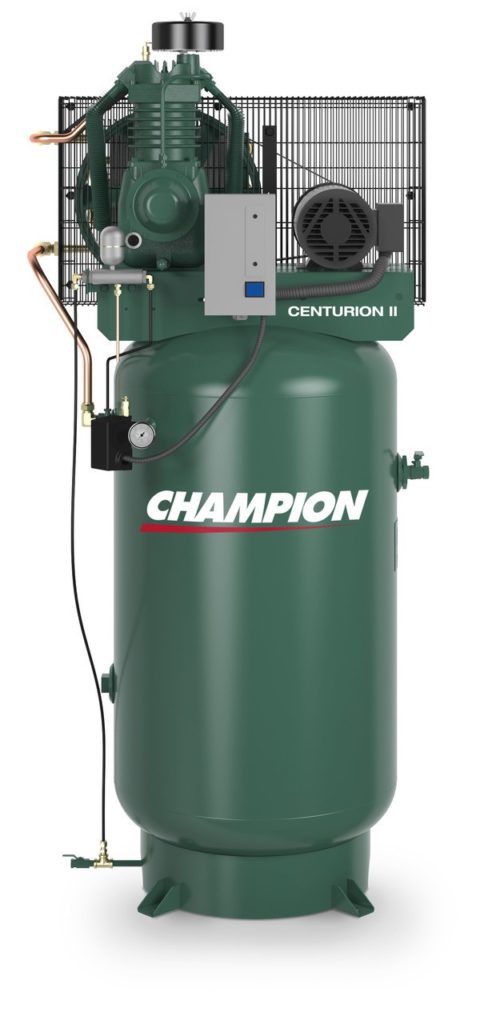
A two-stage compressor compresses air in two separate stages, using an intercooler between them to remove heat before the second compression step. This design allows many industrial two-stage reciprocating compressors to deliver around 175 PSI, with higher-pressure configurations available depending on the model and application.
The defining characteristic is the intercooler. Cooling the air between stages means the second-stage cylinder receives denser air, requiring less energy to reach the final delivery pressure.
How a Two-Stage Air Compressor Works
A two-stage air compressor completes compression in two steps, with an intercooler between stages that removes heat before air enters the second cylinder.
The first-stage piston compresses air to an intermediate pressure before it passes through the intercooler and enters the second-stage cylinder for final compression to around 175 PSI or higher depending on the model.
How a Single-Stage Air Compressor Works
Single-stage air compressors compress incoming air to final delivery pressure in one compression stage. Most perform reliably up to 90 to 125 PSI, covering automotive service, light fabrication, and general shop work. They cost less upfront, have fewer components to maintain, and hold up well when duty cycles are intermittent and pressure demands stay below 100 PSI. APEC stocks a full line of rotary screw compressors alongside reciprocating models for direct comparison.
Pressure Range: What Each Type Can Handle
Single-stage units work best under 125 PSI. The intercooled design sustains higher delivery pressures without the thermal penalties of compressing air in a single stroke.
When a single-stage compressor is pushed to 150 PSI, it generates significantly more heat per stroke than a two-stage air compressor reaching the same pressure across two cooled steps. That excess heat accelerates ring wear, reduces volumetric efficiency, and shortens service intervals. For a shop with moderate, intermittent demand, the trade-off may be workable. For multi-shift operations where your compressor runs hard for hours at a stretch, the intercooled design’s lower thermal load can reduce stress on compressor components during sustained high-pressure operation.
Applications That Call for the Intercooled Design
Applications with sustained high-pressure demand, heavy duty cycles, or both are strong candidates for a two-stage air compressor. Depending on required PSI and CFM, this can include certain sandblasting systems, industrial finishing operations, pneumatic equipment and manufacturing processes.
If your tools or processes need consistent pressure at or above 125 PSI across a full work shift, a single-stage unit will run outside its efficient operating range. The intercooled pump is built for that demand. APEC’s two-stage air compressor lineup includes models sized for those applications, and APEC’s air compressor sizing guide walks through the CFM and PSI math so you buy for actual demand.
Energy Efficiency: Does the Design Pay Off?
Intercooling drops air temperature between stages, making the air denser and easier to compress. CAGI performance data sheets, published through the Compressed Air and Gas Institute’s performance verification program, provide a standard basis for comparing efficiency metrics including specific power expressed as kW per 100 CFM. The DOE compressed air best practices resource from the Better Buildings Initiative covers system design guidance for maximizing installation efficiency. On the regulatory side, OSHA 29 CFR 1910.169 establishes requirements for air receivers including pressure gauges, safety valves, and receiver drainage, and OSHA’s compressed gas equipment standards apply broadly to compressed air installations. Proper sizing, installation, and maintenance all contribute to safe, reliable operation.
What to Consider Before You Buy
Match your purchase to your actual demand: required PSI, total CFM, daily duty cycle, operating environment, and total cost of ownership.
Delivery pressure is the first gate: if any process in your shop runs above 100 PSI, start your search with two-stage air compressor models. Total CFM comes next: add up the requirements for equipment that may operate simultaneously, then include an appropriate capacity margin for leaks and future needs. Duty cycle separates the occasional user from the multi-shift operation; near-continuous load is where the intercooled design’s efficiency and component-life advantages compound over time. Factor ambient temperature into your site assessment, and include energy cost, maintenance intervals, and expected service life when comparing purchase prices. APEC’s service team can review your requirements and recommend the right fit.
Frequently Asked Questions
A two-stage air compressor is a reciprocating compressor that completes compression in two steps. The first stage brings air to an intermediate pressure; an intercooler removes heat; the second stage compresses to final delivery pressure. The result is higher output pressure delivered more efficiently, with lower operating temperatures and reduced thermal stress compared with attempting equivalent high-pressure compression in a single stage.
Not always. A two-stage air compressor is the right call for sustained high-pressure operation above 100 PSI and heavy-duty cycles. For intermittent use at lighter pressures, a single-stage is often more cost-effective upfront and adequate for the application.
Many industrial two-stage reciprocating compressors are rated around 175 PSI, although available pressure varies by model and application.
Service life varies significantly based on operating hours, duty cycle, environment, maintenance and compressor design. Following the manufacturer’s preventive maintenance schedule, maintaining proper lubrication and cooling, and selecting a compressor sized for the application can all help extend equipment life.
Air Power Equipment Company has served industrial and commercial customers across Oklahoma City and the surrounding region since 1979. Whether you need help selecting a two-stage air compressor or scheduling service, the APEC team is ready. Contact APEC at aircompressorcfm.com or call 405-445-1216.