
- 01 Why Air Leaks Are So Expensive
- 02 Your Energy Bills Keep Climbing
- 03 What Does a Compressor Air Leak Sound Like?
- 04 Production Equipment Underperforms
- 05 Compressor Runtime Increases, Accelerating Wear
- 06 Pressure Drops Create Inconsistent Output
- 07 Maintenance Costs Multiply
- 08 Safety Risks Compound Over Time
- 09 How to Find and Fix Air Leaks
- 10 Frequently Asked Questions
A compressor air leak is one of the most expensive and overlooked problems in industrial facilities. According to the U.S. Department of Energy, air leaks typically waste 20 to 30 percent of a compressor’s total output, driving up energy costs and degrading system pressure across every tool and process that depends on it.
Why Air Leaks Are So Expensive
A single small compressor air leak in a distribution line might seem minor. But across a facility with dozens of fittings, hoses, and valves, those losses compound quickly. The Compressed Air Challenge estimates that a 1/8-inch hole at 100 PSI can waste more than 25 CFM. At typical industrial electricity rates, that one compressor air leak can cost over $2,500 per year. Most facilities have more than one.
Your Energy Bills Keep Climbing
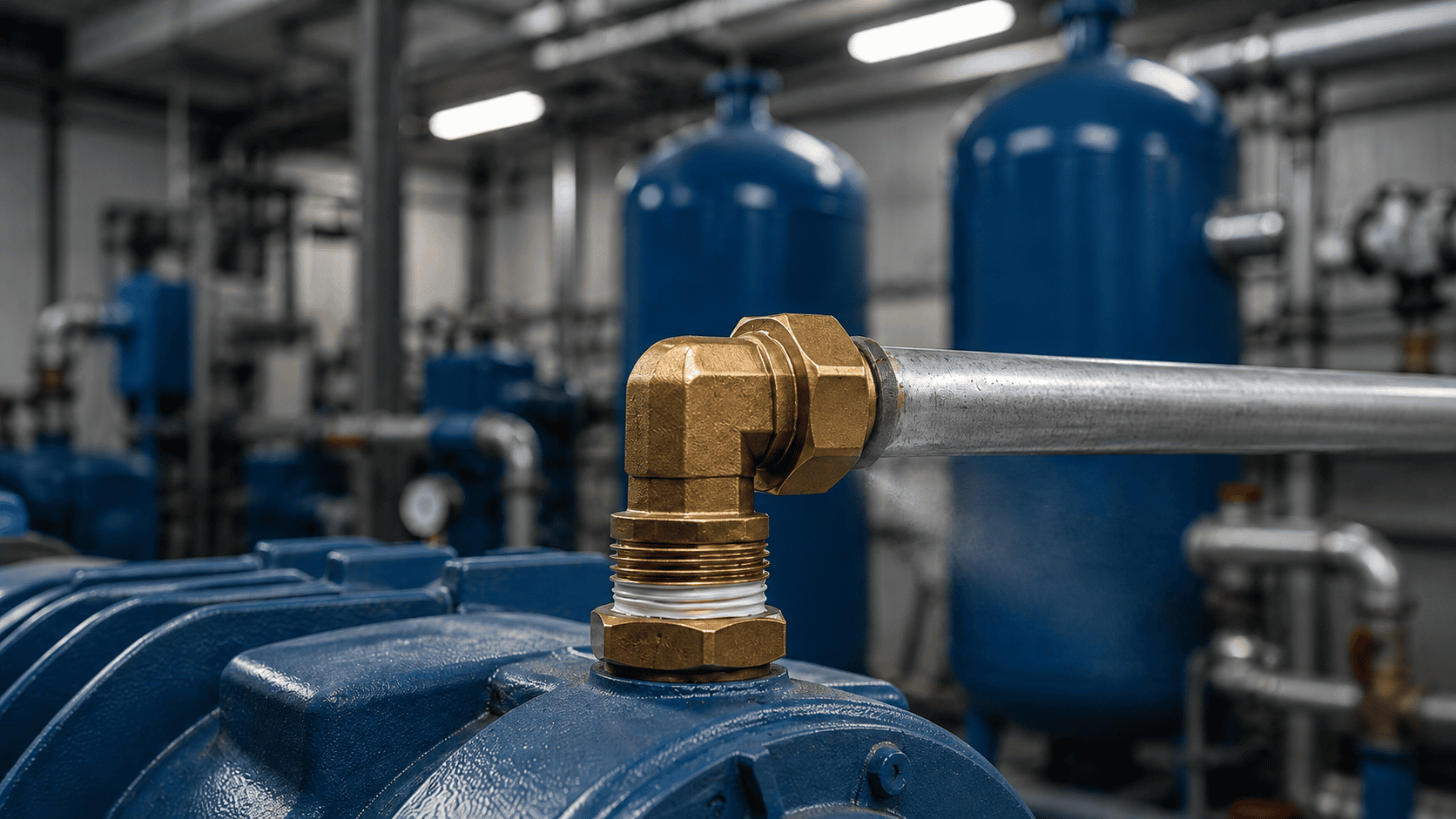
When a compressor air leak develops, the compressor works harder to maintain line pressure. More motor runtime means more electricity consumed and higher utility bills, even when nothing about your operation has changed.
As of 2024, compressed air accounts for roughly 10 percent of all industrial electricity use in the U.S., according to the U.S. Department of Energy. A facility losing 25 percent of that output to leaks is paying for a quarter of its air production to accomplish nothing.
What Does a Compressor Air Leak Sound Like?
In a quiet facility, you can often hear a compressor air leak as faint hissing near fittings or flexible hose connections. In louder environments, most leaks are inaudible without a detection tool. Ultrasonic detectors are the industry-standard method for finding leaks while the system stays in operation.
Common locations where air leaks develop:
- Threaded pipe connections with degraded thread sealant
- Quick-connect fittings with worn internal seals
- Flexible hoses with cracked outer jackets
- Pressure regulator and filter housing connections
- Point-of-use tool connections and auto-drain outlets
Production Equipment Underperforms
A compressor air leak upstream from your production tools can drop pressure at the point of use below the tool’s rated spec. When a pneumatic tool runs below design pressure, torque specs become unreliable, cycle times increase, and quality on precision applications can suffer in ways that are hard to trace back.
Most facilities assume performance issues are a tool problem. Often, the actual culprit is a compressor air leak somewhere in the distribution system.
Compressor Runtime Increases, Accelerating Wear
Every extra hour a compressor runs because of leaks adds wear to bearings, pistons, valves, and the drive motor. When leaks push runtime beyond designed duty cycles, components can wear faster than the maintenance schedule anticipates.
Pressure Drops Create Inconsistent Output
When a compressor air leak pulls pressure down in one zone, the compressor may increase output to compensate, which can affect other zones or trigger false alerts on monitoring systems.
Any process that depends on consistent CFM delivery, such as spray finishing, conveying, or precision assembly, can see quality problems during pressure swings. Diagnosing those problems without ruling out a leak first can waste significant time on the wrong root cause.
Maintenance Costs Multiply
A compressor running extra hours needs more frequent service: more oil changes, more filter replacements, more technician time. Those costs scale with runtime, not calendar time.
There is also the cost of the compressor air leak growing. Moisture at a leaking fitting can cause corrosion on nearby piping, and a cracked hose can fail completely under pressure, sometimes mid-shift. Early detection is almost always less expensive than waiting. The OSHA compressed air guidelines offer a useful reference for safe system management.
Safety Risks Compound Over Time
A leaking fitting that has been slowly loosening under system pressure can fail unexpectedly. High-pressure air can cause serious injury even at pressures well below typical operating ranges.
OSHA’s general industry standards (29 CFR 1910.242) specify maximum nozzle pressures, in part because of documented injury patterns. A leak that goes unaddressed is also a connection that has not been inspected. The safety case for regular leak surveys is as strong as the financial case.
How to Find and Fix Air Leaks
The most effective approach is a scheduled ultrasonic leak survey while the system runs under normal operating pressure. This identifies every leak, assigns a CFM loss estimate to each, and prioritizes repairs by cost impact.
APEC provides compressed air audits, leak detection, and repair for industrial facilities throughout Oklahoma City. If your energy bills have been climbing without a clear cause, or your tools are underperforming, a leak survey is often the fastest diagnostic.
Schedule an audit through our compressed air services page, or explore our maintenance programs.
Frequently Asked Questions
A 1/8-inch leak at 100 PSI can waste more than 25 CFM and cost over $2,500 per year, according to the Compressed Air Challenge. Multiple leaks across a system can push annual losses into five figures.
Ultrasonic leak detectors are the most reliable method during normal operation. For smaller facilities, a soap bubble test on fittings can find larger leaks during a planned shutdown.
Yes. Even a 2 PSI drop can affect pneumatic tool torque accuracy, cycle time, and output consistency on precision assembly equipment.
Most guidelines recommend a full survey at least once per year, with follow-up checks after major system maintenance or expansion. High-production facilities may benefit from quarterly surveys.
Worn thread sealant, degraded O-rings in quick-connect fittings, cracked flexible hose, and loose point-of-use connections. Regular inspection catches most before they grow.
APEC has been serving Oklahoma City industrial facilities for decades. If you suspect a compressor air leak, our team can survey your system, quantify the losses, and get it repaired. Reach out at aircompressorcfm.com/contact to schedule.